The Evolution of Cinema Storytelling
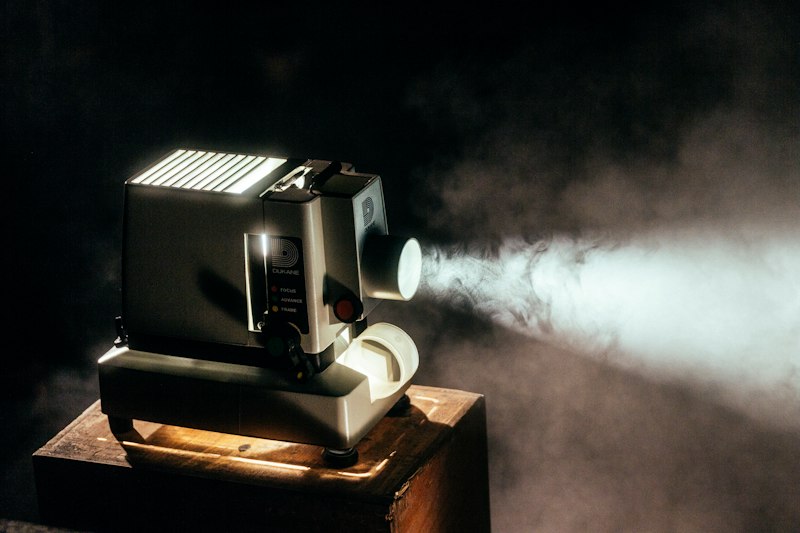
From a single locked-off shot of a train arriving at a station to multi-layered, temporally complex narratives that unfold across hours — cinema's relationship with storytelling has undergone one of the most rapid and profound evolutions in the history of human expression.
When the Lumière Brothers screened their short films to a Parisian audience in December 1895, there was no concept of cinematic narrative as we understand it today. The films were demonstrations — proof of concept for a new visual technology. A train arrived. Workers left a factory. A gardener was surprised by a garden hose. Yet even in these brief moments, something about the way human beings process images in sequence was already in play: we look for meaning, for connection, for story.
It was Georges Méliès who first understood that cinema could be a tool for constructing worlds that could not otherwise exist. Working between 1896 and 1914, Méliès developed what we might now call the grammar of cinematic fantasy — he cut between shots to create the illusion of transformation, used double exposure to place figures in impossible settings, and built theatrical sets that could be populated with trick effects. His 1902 film A Trip to the Moon remains an extraordinary piece of work precisely because it demonstrates such clear storytelling intent.
The Language Develops: D.W. Griffith and the Vocabulary of Editing
If Méliès established that film could construct fiction, it was D.W. Griffith who began assembling the vocabulary of cinematic language that would define the form for decades to come. Griffith introduced and refined a series of techniques that are now so fundamental to how films are made that we rarely pause to consider them: the close-up, which allowed audiences to read a character's emotional state from their face; cross-cutting between parallel narratives to create tension; the use of camera position to suggest relationships between characters; and the fade to imply the passage of time.
His 1915 feature The Birth of a Nation is a genuinely complex historical artefact — technically innovative in ways that were transformative for the medium, and simultaneously built around a narrative that perpetuated deeply racist ideology. Understanding this duality is essential to serious engagement with film history. Griffith's subsequent Intolerance (1916), perhaps as a response to criticism, expanded the scope of what cinematic storytelling could encompass, weaving together four distinct historical narratives and intercutting between them over nearly three hours.
The capacity of cinema to move between times, places, and perspectives in a single act of watching is perhaps its defining quality as a narrative art form — one that has no true equivalent in literature or theatre.
Soviet Montage and the Theory of Collision
In the years following the Russian Revolution, a group of Soviet filmmakers and theorists developed what would become one of cinema's most influential bodies of thought. Sergei Eisenstein, Vsevolod Pudovkin, and Dziga Vertov each approached the question of cinematic construction differently, but all shared a conviction that cinema was not simply a recording of reality — it was a medium capable of producing meaning through the deliberate juxtaposition of images.
Eisenstein's theory of montage, particularly his concept of "collision" montage, proposed that placing two images in sequence produces a meaning that neither image contains independently. In Battleship Potemkin (1925), the famous Odessa Steps sequence achieves its emotional power not through any single image but through the rhythm of the editing — the alternation between the advancing soldiers, the fleeing crowd, and a series of close-up details that are, individually, almost still photographs, but in sequence produce an almost unbearable sense of violence and tragedy.
Classical Hollywood and the Invisible Edit
While European cinema in the 1920s was exploring the expressive possibilities of form, Hollywood was developing a different approach — one built around making the craft of filmmaking as invisible as possible. The classical Hollywood style, consolidated during the 1930s and 1940s, was based on a set of continuity principles designed to maintain the audience's immersion in the story without drawing attention to the act of filmmaking.
Continuity editing — the 180-degree rule, shot-reverse-shot dialogue sequences, eyeline matching — created a seamless spatial logic that allowed audiences to follow complex narratives without effort. Studios like MGM, Paramount, and Warner Bros. refined this system into a remarkably efficient production model, turning out genre films that, at their best, had real artistic and emotional depth beneath their commercial surface.
Films like Casablanca (1942), directed by Michael Curtiz, or Double Indemnity (1944), directed by Billy Wilder, demonstrate just how much expressive range was possible within the classical system. The cynicism of film noir, the screwball comedy's compressed verbal wit, the melodrama's engagement with repressed emotion — all operated within the same basic grammar of invisible continuity.
Italian Neorealism and the Documentary Turn
In the immediate aftermath of the Second World War, Italian cinema took a different direction that would have profound consequences for world film. Directors like Roberto Rossellini, Vittorio De Sica, and Luchino Visconti turned away from the artificiality of studio-bound production and developed a practice of shooting on location, using non-professional actors alongside trained ones, and focusing on the everyday experiences of ordinary people living in difficult circumstances.
Rossellini's Rome, Open City (1945) was shot partly on the streets of Rome while German occupation was still fresh. De Sica's Bicycle Thieves (1948), about a father and son searching for a stolen bicycle in postwar Rome, stripped storytelling down to an almost unbearable simplicity. These films didn't rely on plot complexity or dramatic revelation — their power came from close observation and an unwillingness to offer false comfort.
The French New Wave and the Reinvention of Form
If neorealism was cinema looking outward at the social world, the French New Wave of the late 1950s and early 1960s was cinema becoming self-conscious about its own nature as a medium. Directors who had formed their critical sensibilities writing for Cahiers du Cinéma — most prominently François Truffaut, Jean-Luc Godard, Agnès Varda, and Claude Chabrol — brought to their filmmaking a profound awareness of cinema's history and a genuine desire to break with convention.

Godard's À bout de souffle (Breathless, 1960) is perhaps the canonical example of New Wave disruption. Its jump cuts violated the continuity conventions that had governed Hollywood editing for decades. Its characters quoted philosophy, broke the fourth wall, and referred to other films. Its story was deliberately elliptical, refusing to provide the narrative satisfactions that classical cinema had trained audiences to expect. And yet it was enormously watchable — energetic, funny, and finally quite moving.
New Hollywood and Authorial Cinema
By the late 1960s, the studio system that had produced classical Hollywood was in decline. A new generation of American directors — Francis Ford Coppola, Martin Scorsese, Robert Altman, Brian De Palma, Hal Ashby, among others — had grown up watching European art cinema and developed ambitions that went beyond genre entertainment.
The films produced during what is often called the New Hollywood period (roughly 1967–1980) represented a genuine reimagining of what commercial American cinema could be. Coppola's The Godfather (1972) was simultaneously a popular epic and a serious examination of power, loyalty, and moral corruption. Altman's Nashville (1975) fragmented narrative across twenty-four characters. Scorsese's Taxi Driver (1976) placed the audience inside a disturbed consciousness and refused to reassure them about what they were seeing.
The Contemporary Landscape: Complexity and Multiplicity
The past three decades of cinema have been characterised above all by the expansion of what cinema can mean and where it comes from. The globalisation of festival culture has made serious films from South Korea, Iran, Romania, Argentina, and dozens of other countries available to audiences worldwide in ways that were simply not possible before. The digital revolution changed production, distribution, and exhibition. And the rise of streaming has altered the relationship between audience and film in ways that are still being worked through.
Contemporary cinema storytelling encompasses everything from the maximalist complexity of a film like Christopher Nolan's Memento (2000), which tells its story in reverse chronological order, to the spare minimalism of Romanian New Wave films like 4 Months, 3 Weeks and 2 Days (2007) by Cristian Mungiu. It encompasses the genre-bending social allegory of Parasite (2019) by Bong Joon-ho, the first non-English language film to win the Academy Award for Best Picture, and the intimate conversational films of Hong Sangsoo that strip storytelling down to meeting and conversation and the passage of time.
What connects a Lumière actuarial film from 1895 to Parasite in 2019 is not a continuous artistic tradition — cinema has been broken and remade and broken again too many times for that — but rather a persistent human impulse. We want stories. We want to see lives other than our own. We want to understand the world through images that move.